

Did you know that nearly 60% of Americans struggle to cover a sudden $1,000 emergency expense? This startling reality highlights why taking control of your wallet is more than just a chore; it is a vital step toward lasting freedom.
Mastering your money provides the peace of mind you deserve. By applying these proven Personal Finance Tips, you can transform your relationship with cash and build a solid foundation for your future success.
Whether you are just starting your career or looking to refine your habits, this guide offers simple, actionable advice. Everyone can improve their situation regardless of their current income level. Implementing these Personal Finance Tips will help you navigate the path to stability with confidence.
Key Takeaways
- Emergency funds act as a safety net for unexpected costs.
- Small, consistent changes lead to significant long-term wealth.
- Budgeting helps you prioritize spending on what truly matters.
- Financial health reduces stress and improves overall well-being.
- Starting early allows your savings to grow through compound interest.
Assessing Your Current Financial Landscape
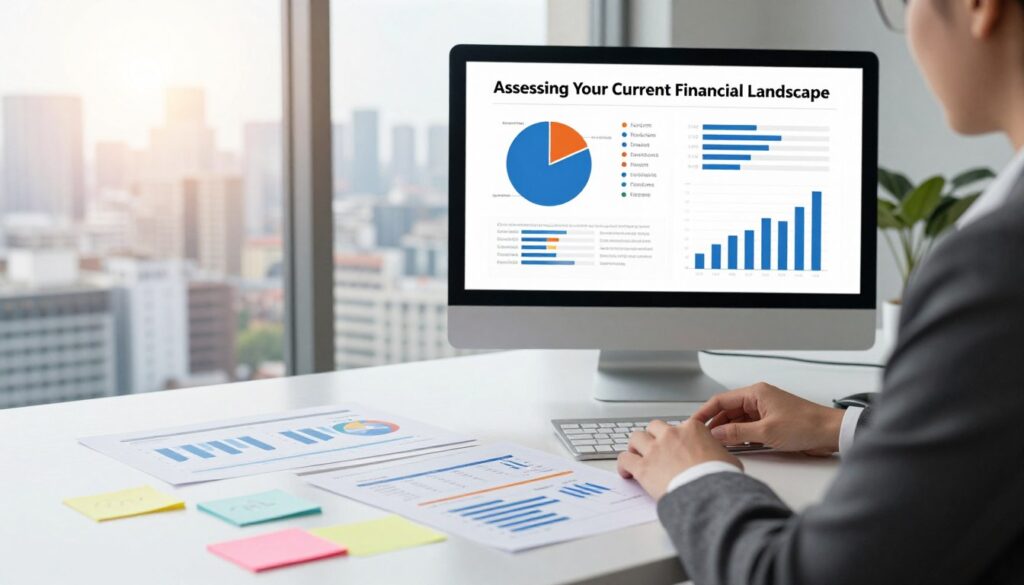
Understanding your money starts with a simple, honest assessment of what you own and what you owe. By taking this first step, you gain the clarity needed to build effective financial planning strategies that actually work for your lifestyle.
Calculating Your Net Worth
Your net worth is the most accurate snapshot of your financial health. To calculate it, list everything you own, such as savings accounts, retirement funds, and property, then subtract your total debts like credit card balances or student loans.
This simple math reveals your true standing. If your result is positive, you are building wealth; if it is negative, you have a clear target for improvement. Tracking this number annually helps you measure your progress over time.
Tracking Monthly Cash Flow
Once you know your net worth, you must monitor the money moving in and out of your accounts each month. Consistent tracking is one of the most practical money management tips for anyone looking to gain control over their spending.
You can use a simple spreadsheet or a mobile app to log every transaction. When you see exactly where your money goes, you can make better choices about your daily habits. This awareness is the secret to long-term success.
Identifying Fixed Versus Variable Expenses
To master your budget, you should categorize your spending into two distinct groups. Understanding the difference between these costs allows you to adjust your habits without feeling overwhelmed.
- Fixed Expenses: These are recurring costs that stay the same each month, such as rent, mortgage payments, or insurance premiums.
- Variable Expenses: These costs fluctuate based on your choices, including groceries, dining out, entertainment, and utility bills.
Focusing on your variable expenses is often the fastest way to find extra cash. By applying these money management tips, you can refine your financial planning strategies and ensure your money is working as hard as you do.
Creating a Sustainable Budgeting Strategy
Financial freedom is rarely an accident; it is the result of consistent habits and smart planning. A sustainable budget acts as the foundation for every major financial goal you hope to achieve. By organizing your income, you can stop wondering where your money goes and start telling it exactly what to do.
Implementing the Fifty-Thirty-Twenty Rule
One of the most effective budgeting tips involves the fifty-thirty-twenty rule. This framework simplifies your monthly allocations by dividing your after-tax income into three distinct buckets. It provides a clear structure that prevents overspending while ensuring you prioritize your future.
“A budget is telling your money where to go instead of wondering where it went.”
Under this system, you allocate 50% of your income to needs, such as rent, utilities, and groceries. You dedicate 30% to wants, which covers dining out or entertainment. Finally, you reserve 20% for savings, investments, or paying down high-interest debt.
Utilizing Digital Tools for Expense Tracking
Modern technology makes it easier than ever to maintain your financial health. Utilizing digital tools for expense tracking helps you automate the tedious parts of your money management tips. These platforms sync with your bank accounts to categorize transactions in real-time, giving you a bird’s-eye view of your spending habits.
Choosing Between Apps Like Mint or YNAB
Selecting the right platform depends on your specific personality and financial goals. While both tools help you track expenses, they offer different philosophies for managing your cash flow:
- Mint: Best for those who want a passive, automated overview of their net worth and spending trends.
- YNAB (You Need A Budget): Ideal for users who prefer a proactive, “zero-based” budgeting approach where every dollar is assigned a specific job.
Ultimately, the best tool is the one you actually use consistently. By leveraging these digital resources, you can maintain control over your finances without feeling restricted or overwhelmed by complex spreadsheets.
Essential Personal Finance Tips for Reducing Debt
Breaking free from the cycle of debt requires a clear and actionable strategy. By lowering your liabilities, you free up income that can be redirected toward wealth building techniques. These Personal Finance Tips are designed to help you regain control of your financial future.
Prioritizing High-Interest Debt Repayment
The most mathematically efficient way to pay off debt is to target accounts with the highest interest rates first. This strategy, often called the avalanche method, minimizes the total interest you pay over time. By focusing your extra payments on high-interest credit cards, you save significant money in the long run.
“Debt is the slavery of the free.”
Applying the Debt Snowball Method
If you need a psychological boost, the debt snowball method is an excellent alternative. You start by paying off your smallest balances first while making minimum payments on larger debts. This approach provides quick wins that keep you motivated as you clear your list of creditors.
Seeing smaller debts disappear quickly creates a sense of momentum. This positive reinforcement makes it easier to stick to your plan until every balance reaches zero.
Exploring Debt Consolidation Options
Sometimes, managing multiple payments becomes overwhelming. Debt consolidation allows you to combine several high-interest debts into a single loan with a lower interest rate. This simplifies your monthly obligations and can reduce your overall financial stress.
Before choosing this path, ensure the new loan terms are truly beneficial. Using these Personal Finance Tips effectively will accelerate your journey toward financial independence and support your long-term wealth building techniques.
Strategic Saving and Emergency Fund Building
A robust emergency fund acts as your personal insurance policy against life’s unpredictable turns. By prioritizing these saving money ideas, you create a financial cushion that allows you to navigate unexpected challenges with confidence and ease.
Automating Your Savings Contributions
The most effective way to grow your wealth is to remove the temptation to spend before you save. By automating your savings, you ensure that a portion of your paycheck moves directly into a high-yield account every month.
“Do not save what is left after spending, but spend what is left after saving.”
This “pay yourself first” strategy turns saving into a background task. You will find that your balance grows steadily without requiring constant manual effort or willpower.
Setting Realistic Short-Term and Long-Term Goals
Clear objectives provide the motivation needed to stay consistent with your financial plan. Whether you are saving for a vacation or a down payment, breaking these down into actionable steps makes the process feel manageable.
- Short-term: Focus on building a starter fund of $1,000 to cover minor repairs.
- Mid-term: Aim to save for specific life events like weddings or vehicle replacements.
- Long-term: Prioritize your retirement nest egg to ensure future stability.
Determining Your Ideal Emergency Fund Size
Many experts suggest that your emergency fund should cover three to six months of essential living expenses. However, your specific needs depend on your job stability, family size, and monthly obligations.
If you have a variable income, you might want to lean toward the higher end of that range. Implementing these smart saving money ideas will help you feel secure, knowing that you are prepared for whatever the future holds.
Investing for Long-Term Wealth Building
Once you have stabilized your finances, the next logical step is to put your money to work through strategic investments. Integrating these financial planning strategies into your life allows your capital to compound over time. This process is the primary engine for achieving true financial independence.
Understanding Tax-Advantaged Retirement Accounts
Retirement accounts are powerful tools designed to help you save while reducing your current tax burden. By utilizing these accounts, you keep more of your money working for your future rather than paying it out in annual taxes.
Maximizing 401k Employer Matches
If your employer offers a 401k plan, you should prioritize contributing enough to capture the full company match. This is essentially free money that provides an immediate return on your investment. Failing to take advantage of this benefit is equivalent to leaving a portion of your salary on the table.
Utilizing Roth IRAs for Future Growth
A Roth IRA is another essential vehicle for your long-term goals. Because you contribute after-tax dollars, your investments grow tax-free, and you pay zero taxes on withdrawals during retirement. This wealth building technique is particularly effective if you expect to be in a higher tax bracket later in life.
Diversifying Your Investment Portfolio
Diversification is the practice of spreading your investments across various asset classes, such as stocks, bonds, and real estate. This approach helps you manage market volatility while positioning your assets to benefit from long-term growth. By not putting all your eggs in one basket, you protect your capital from significant downturns in any single sector.
Effective financial planning strategies rely on a balanced portfolio that aligns with your personal risk tolerance. As you continue to refine your wealth building techniques, remember that consistency is more important than timing the market. Staying the course will help you reach your long-term objectives with greater confidence.
Conclusion
Mastering your money requires a shift in mindset and a commitment to daily habits. You now possess the tools to transform your bank account through practical budgeting tips that prioritize your long-term stability.
Small changes often lead to significant results over time. Implementing creative saving money ideas allows you to build a safety net while pursuing your personal dreams. Every dollar you manage today builds a stronger foundation for your life in the United States.
Wealth creation relies on patience and discipline. The most effective investing advice centers on starting early and maintaining a steady pace with your contributions. Platforms like Vanguard or Fidelity make it easy to automate these processes for better growth.
Your journey toward financial independence starts with the choices you make right now. Review your progress often and adjust your plans to match your evolving needs. Share your favorite strategies with friends or family to keep yourself accountable on this path.